K-Style Gutter Installation
K-style is the American default — the flat-backed, crown-molding-profiled gutter that seamless machines extrude in every installer's trailer. Free referral to a licensed local pro — one call, no obligation.
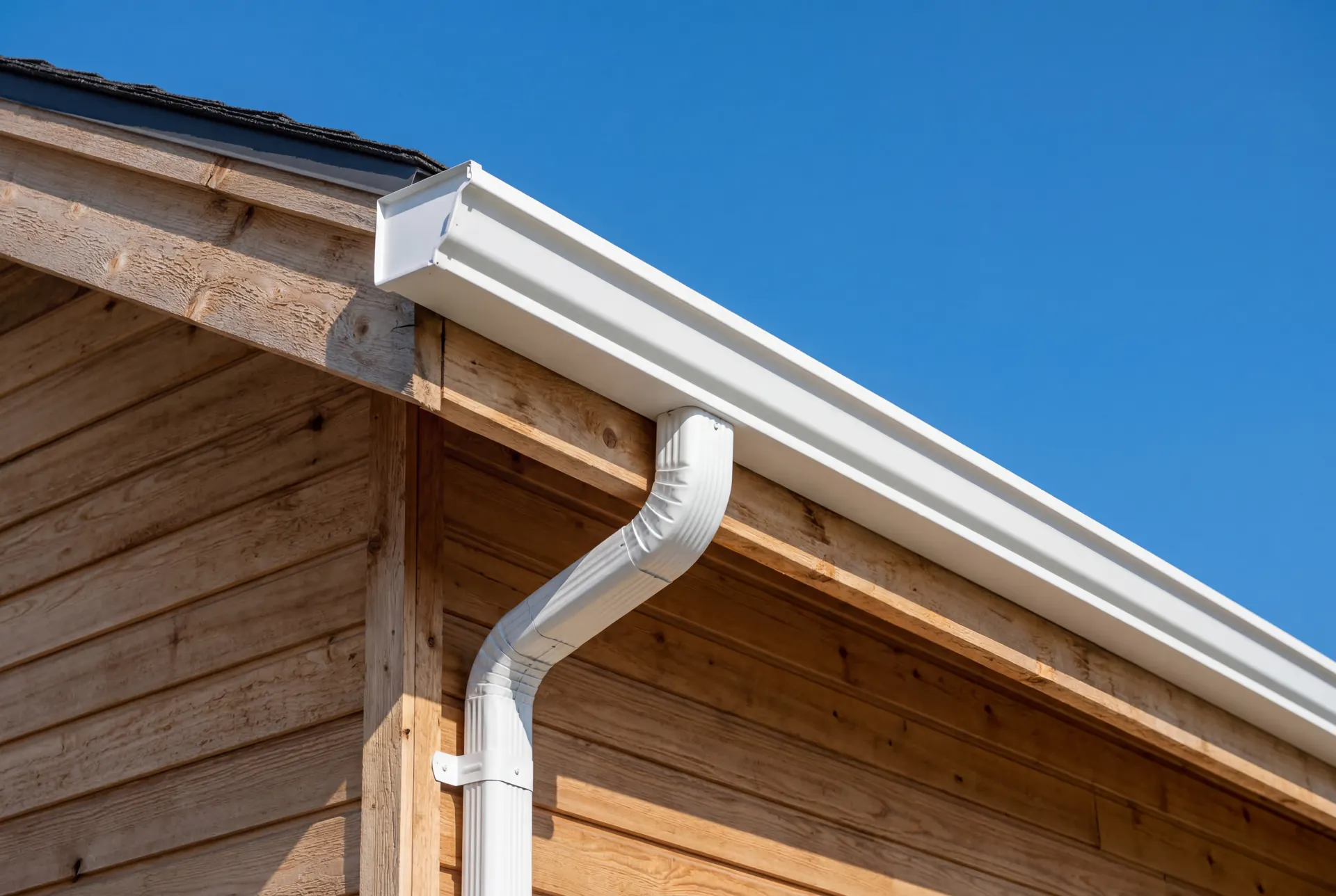
K-style is the American default — the flat-backed, crown-molding-profiled gutter that seamless machines extrude in every installer's trailer. Free referral to a licensed local pro — one call, no obligation.
K-style is the American default — the flat-backed, crown-molding-profiled gutter that seamless machines extrude in every installer's trailer. The shape earns its dominance: the flat back screws directly to fascia without brackets, the folded front adds beam stiffness that lets it span hangers without sagging, and it carries roughly 20% more water than a half-round of equal width. If your house was built after 1960, odds are it wears K-style now.
These are the specific failure modes licensed installers see most on this work.
Inside angles of the profile trapping debris where the curve meets the floor.
The classic K-style failure: sag between over-spaced hangers flattening the pitch.
Front-lip bending from ladders leaned directly on the gutter.
One call to (888) 650-1415 — tell us your ZIP code and what the gutters are doing.
We connect you with a licensed local gutter professional who covers your area.
The pro inspects and quotes the work. No obligation, and the referral costs you nothing.
Your local pro completes the job — installation, repair, or maintenance.
It's the National Association of Home Builders' profile letter — the cross-section resembles the letter K and mimics crown molding. The shape is decorative fascia trim that happens to be a high-capacity water channel.
5-inch serves most single-family roofs. Go 6-inch for steep pitches, metal roofs, long runs, valley concentrations, or intense-rain regions — the capacity jump is about 40% and the upcharge is modest during install.
The folded front lip and flat back act like a box beam. That stiffness is why K-style spans 24-inch hanger spacing that would belly a half-round, and why it survives ladder abuse (barely) that creases other profiles.
Marginally — the profile's inside angles hold damp debris where a half-round's curve rinses clean. Under heavy canopy the difference is real; guards or more frequent cleaning close the gap.
Hidden hangers screwed through the back into fascia are today's standard — strong and invisible. Spike-and-ferrule (the big nail through the gutter face) is the failed legacy method; if your gutters have visible spike heads, they're due for rehanging.
Yes — seamless copper K-style suits transitional homes that want copper longevity without period brackets. Most copper still goes half-round for tradition, but K-copper is a growing niche.
The most economical seamless profile — it's the industry's volume product. Licensed installers quote by footage, gauge, and stories; GutterLinker's referral is free.
Hangers every 24 inches maximum (18 in snow country), screwed into sound wood, with pitch rechecked at rehang. Sag is a fastening problem, not a profile defect — rehanging a sound K-style run is a half-day fix.
Free referral to a licensed local gutter pro. One call. No obligation.
Call (888) 650-1415 Now